
White Rabbits
Don't Just Watch as Fear and Fascism Descends

The clearing in the woods was home to the small forest creatures. The birds and squirrels shared the trees.
The rabbits and porcupines shared the shade beneath the trees and the frogs and fish shared the cool brown waters of the forest pond.
Until the day the Terrible Things came. Little Rabbit saw their terrible shadows before he saw them.
They stopped at the edge of the clearing and their shadows blotted out the sun.
"We don't have feathers," the frogs said.
"Nor we," said the squirrels.
"Nor we," said the porcupines.
"Nor we," said the rabbits.
The little fish leaped from the water to show the shine of their scales, but the birds twittered nervously in the tops of the trees. Feathers! They rose in the air, then screamed away into the blue of the sky.
But the Terrible Things had brought their terrible nets, and they flung them high and caught the birds and carried them away.
The other forest creatures talked nervously among themselves.
"Those birds were always noisy," the squirrels said.
"There's more room in the trees now," the squirrels said.
"Why did the Terrible Things want the birds?" asked Little Rabbit. "What's wrong with feathers?"
"We mustn't ask," Big Rabbit said. "The Terrible Things don't need a reason. Just be glad it wasn't us they wanted."
Now there were no birds to sing in the clearing. But life went on almost as before. Until the day the Terrible Things came back.
"We have no tails," the frogs said.
"Nor do we. Not real tails," the porcupines said.
The little fish jumped from the water to show the smooth shine of their finned tails and the rabbits turned their rumps so the Terrible Terrible Things could see for themselves.
"Our tails are round and furry," they said. "By no means are they bushy."
The squirrels chattered their fear and ran high into the treetops. But the Terrible Things swung their terrible nets higher than the squirrels could run and wider than the squirrels could leap and they caught them all and carried them away.
"Those squirrels were greedy," Big Rabbit said. "Always storing away things for themselves. Never sharing."
"But why did the Terrible Things take them away?" Little Rabbit asked. "Do the Terrible Things want the clearing for themselves?"
"No. They have their own place," Big Rabbit said. "But the Terrible Things don't need a reason. Just mind your own business, Little Rabbit. We don't want them to get mad at us."
Now there were no birds to sing or squirrels to chatter in the trees. But life in the clearing went on almost as before. Until the day the Terrible Things came again.
Little Rabbit heard the rumble of their terrible voices.
"We have come for every creature that swims," the Terrible Things thundered.
"Oh, we can't swim," the rabbits said quickly.
"And we can't swim," the porcupines said.
The frogs dived deep in the forest pool and ripples spiraled like corkscrews on the dark brown water. The little fish darted this way and that in streaks of silver. But the Terrible Things threw their terrible nets down into the depths and they dragged up the dripping frogs and the shimmering fish and carried them away.
"Why did the Terrible Things take them?" Little Rabbit asked. "What did the frogs and fish do to them?"
"Probably nothing," Big Rabbit said. "But the Terrible Things don't need a reason. Many creatures dislike frogs. Lumpy slimy things. And fish are so cold and unfriendly. They never talk to any of us."
Now there were no birds to sing, no squirrels to chatter, no frogs to croak, no fish to play in the forest pool. A nervous silence filled the clearing. But life went on almost as usual. Until the day the Terrible Things came back.
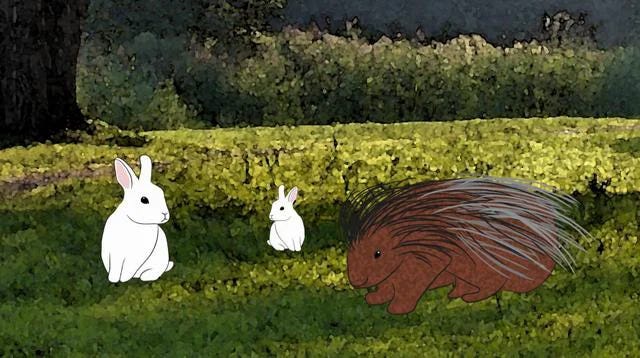
Little Rabbit smelled their terrible smell before they came into sight. The rabbits and the porcupines looked all around, everywhere, except at each other.
"We have come for every creature that sprouts quills," the Terrible Things thundered.
The rabbits stopped quivering. "We don't have quills," they said, fluffing their soft, white fur.
The porcupines bristled with all their strength. But the Terrible Things covered them with their terrible nets, and the porcupines hung in them like flies in a spider's web as the Terrible Things carried them away.
"Those porcupines always were bad tempered," Big Rabbit said shakily. "Prickly, sticky things!"
This time Little Rabbit didn't ask why. By now he knew that the Terrible Things didn't need a reason.
The Terrible Things had gone, but the smell still filled the clearing.
"I liked it better when there were all kinds of creatures in our clearing," he said. "And I think we should move. What if the Terrible Things come back?"
"Nonsense," said Big Rabbit. "Why should we move? This has always been our home. And the Terrible Things won't come back. We are White Rabbits. It couldn't happen to us."
As day followed day Little Rabbit thought Big Rabbit must be right. Until the day the Terrible Things came back.
Little Rabbit saw the terrible gleam of their terrible eyes through the forest darkness. And he smelled the terrible smell.
"We have come for any creature that is white," the Terrible Things thundered.
"There are no white creatures here but us," Big Rabbit said.
"We have come for you," the Terrible Things said.
The rabbits scampered in every direction. "Help!" they cried. "Somebody help!" But there was no one left to help. And the big, circling nets dropped over them, and the Terrible Things carried them away.
All but Little Rabbit, who was little enough to hide in a pile of rocks by the pond and smart enough to stay so still that the Terrible Things thought he was a rock himself.
When they had all gone, Little Rabbit crept into the middle of the empty clearing. "I should have tried to help the other rabbits," he thought. "If only we creatures had stuck together, it could have been different."
Sadly, Little Rabbit left the clearing. He'd go tell other forest creatures about the Terrible Things. He hoped someone would listen.
-Excerpted from Terrible Things: An Allegory of the Holocaust by Eve Bunting. Copyright @ Eve Bunting.
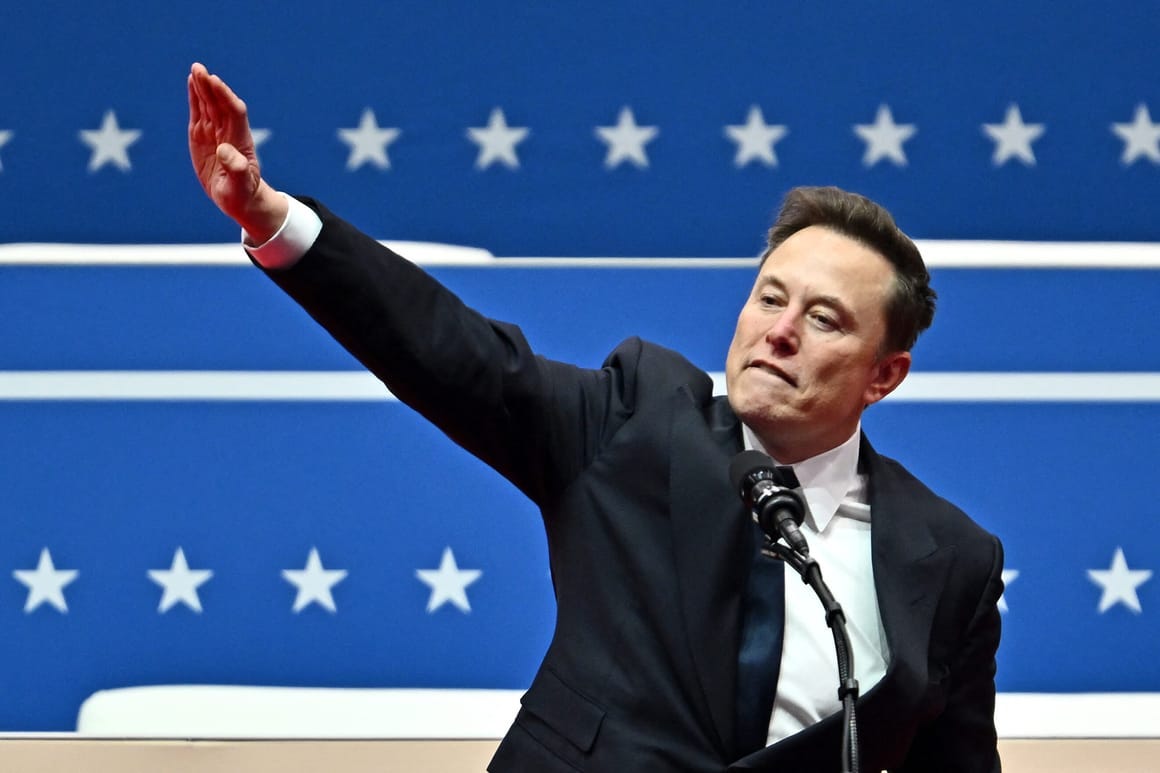
A Nazi salute at inauguration.
1,600 clemencies for insurrectionists who tried to hang the sitting Vice President.
A formal declaration of only two genders.
An attack on birthright citizenship — a right granted under the 14th Amendment in the US Constitution.
No matter your opinion on policy, left or right, the United States has always stood for freedom. Freedom of religion, of the press, of the right to assemble, to protest, and to speak your opinions and hear others’. In just the last week, Americans have felt the hard reality of these fundamental liberties seemingly slipping through their fingers.
Censorship of social media has reached an unprecedented high, exemplified by the TikTok ban that went into effect on Saturday at 10:30pm EST— only for services to be restored less than 14 hours later.
How did we get here?
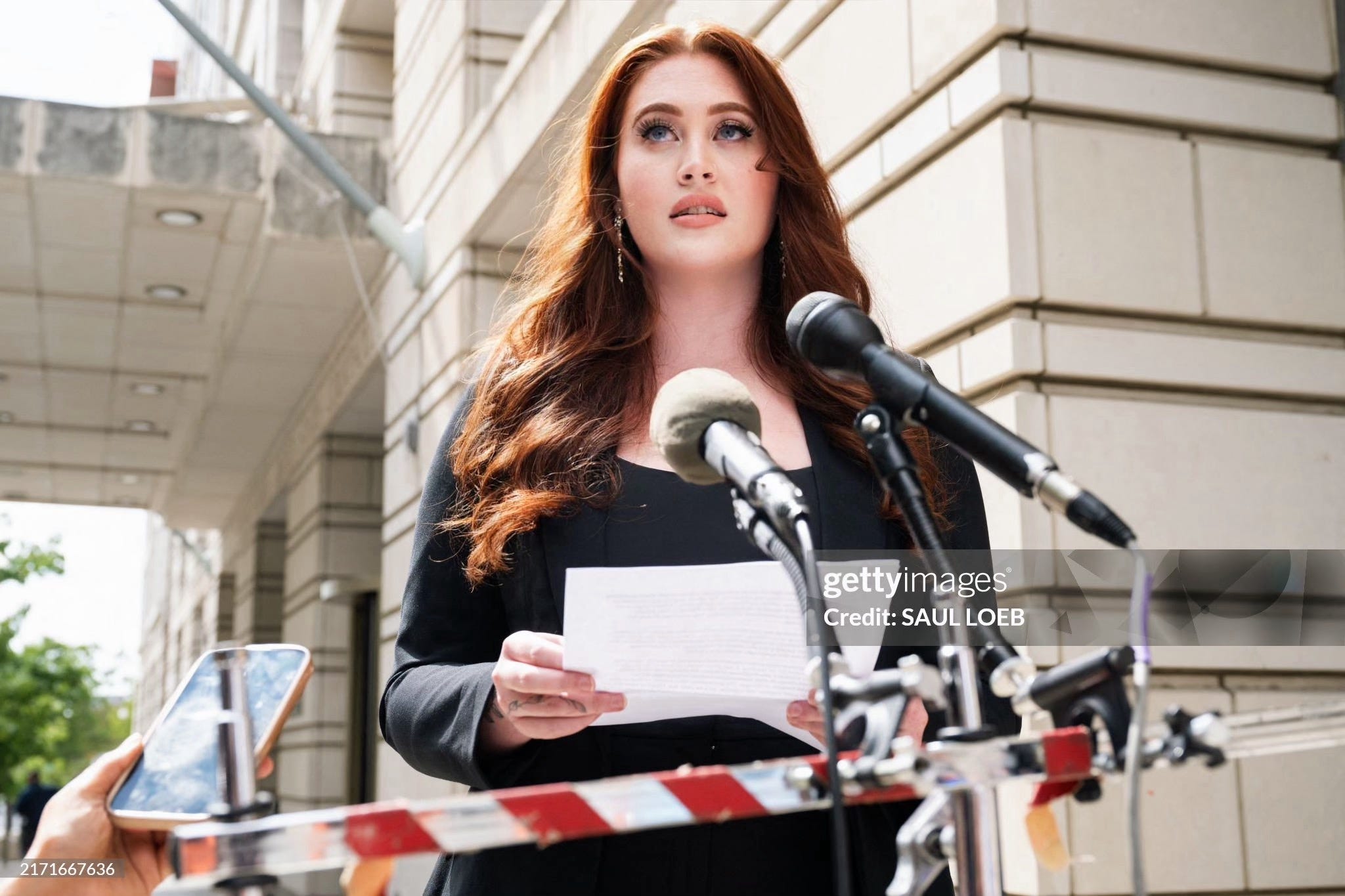
The ban stemmed from legislation passed and signed into law by Joe Biden in April of 2024, which was upheld just last week by the Supreme Court despite legal challenges from TikTok and its creators (including me, hi, plaintiff here!).
While the Biden administration formally passed the bill that brought the ban to fruition, it was Donald Trump in 2020 who initially introduced the concept of banning TikTok.
However, after it brought him significant support among young voters this election cycle, his tune changed. Trump also spent extensive time cozying up with Jeff Yass, a major investor in ByteDance (TikTok’s Chinese parent company), and conveniently, also a Republican mega-donor.
TikTok did not need to go dark on Saturday. In fact, the only thing the bill mandated was service providers preventing users from accessing or hosting the app.
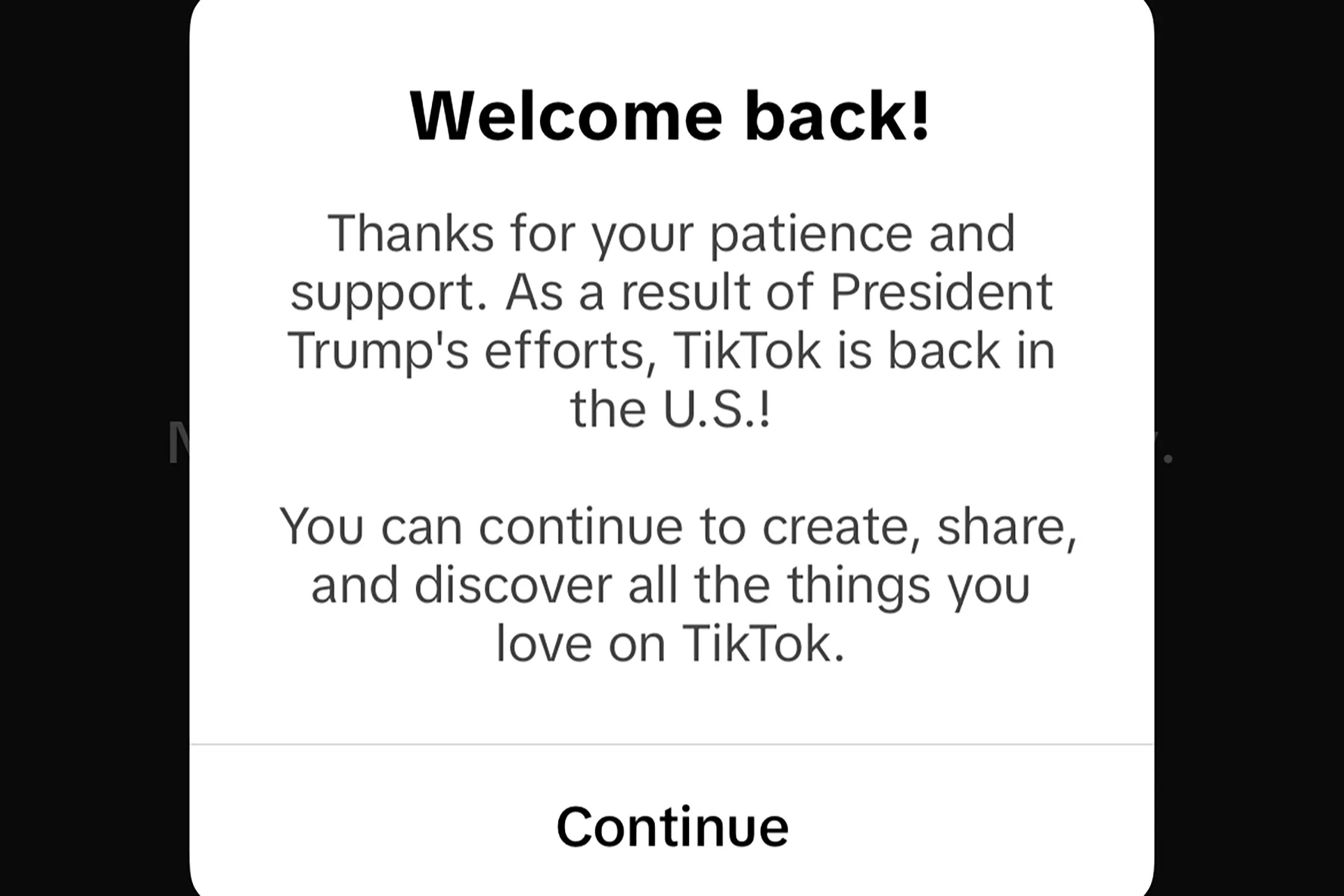
The decision to go offline, along with displaying repeated messages praising (not yet inaugurated) President Trump– came after a private meeting at Mar-a-Lago in December between Shou Chew, the CEO of TikTok, and the President elect.
Shou Chew was among the $900 billion net worth on stage during Trump’s inauguration.
When TikTok came back online, users quickly found that certain phrases were no longer searchable on the platform. For example, searching “Trump election fraud” yields no results, instead showing a “no results found” message.
This problem isn’t new – Meta has been experimenting with censorship for months. The company has been quietly censoring LGBTQ+ content, flagging hashtags such as #gay, #trans, and #bi as “explicit content” for users under 18. Just yesterday, they blocked the search phrase “democrat” from their engines, giving users a “no results found” message. Meta has also faced backlash for automatically enabling “limit political content” settings during updates, effectively curating what users are viewing on their platform without their consent.
Trump signed an executive order extending TikTok’s lifespan by 75 days on his first day in office and proposed a joint venture for the company’s future – a 50/50 split between new U.S. ownership and its current investors. It was unsure who the US owners would be.
While signing the order yesterday, Trump suggested he “could see” the United States government itself taking the 50% stake, claiming it would allow them to police the app. He stated until a deal is approved, “there’s no value. So if we create that value, why aren’t we entitled to like half?”
Efforts to control speech on social media are currently focused on silencing members of the LGBTQ+ community, Trump’s adversaries, and those speaking out against him.
During his inaugural address, he stated “Henceforth, it will be the official policy of the United States that there are only two genders; male and female.”
He followed this statement up late last night by signing an executive order declaring the same thing.
This is not just a loss, but an erasure of entire communities of peoples. Regardless of your opinion of people who identify outside of the gender binary or members of the transgender community —who are going to suffer greatly for simply being who they want to be; Trump’s decree also erases the existence of intersex people, those biologically born with both male and female genitalia. They account for a little over 2% of the population, roughly the same number as those born with red hair in the United States.
Communities now face danger getting their medications, safety in public and in schools, government documentation challenges, and more.
Reproductive rights took a major hit yesterday as well, when the Trump administration took down reproductiverights.gov, a government website that provided essential resources and educational information on birth control, healthcare, abortion, and everything related to reproductive health.
Throughout his campaign, Donald Trump consistently claimed he had no intention of attacking or revoking reproductive rights, insisting he wanted to leave those decisions up to the states as per the Supreme Court’s ruling in Dobbs v. Jackson Women's Health Organization.
Then, on his first day in office, he strips the federal government’s website of resources. Am I surprised? No, not really. Am I disappointed in all of the women who voted for him and fell for yet another lie (from a man who told 30,000 of them during his first term)? Absolutely.
The majority of white women voted for Donald Trump this election cycle. Even more surprising, he received record-high voter turnout among Latinx, Indigenous, and Black voters in comparison to previous elections and Republican support in the modern era.
How does a man who’s actively stripping away rights from minorities still manage to secure their votes?
The answer lies in fear.
When the country is in dismay, prices are up, people can’t afford to pay their electric bill and put food on the table, violence and extremism is on every corner— even a singular ounce of hope is enough to cling onto.
Long term solutions don’t win hearts (or votes)— people gravitate towards whoever says, “this is the problem, and I’m fixing it now”, regardless of how true or reliable that promise is.
Enter Donald Trump: a man who speaks plainly and clearly, telling the working class, “I hear and see your struggles” just to turn around to sell them overpriced merch and cryptocurrency. By offering up a convenient list of enemies—Democrats, immigrants, the LGBTQ+ community—he gives disillusioned people a shared target and, with it, a sense of unity they might not otherwise have found.
By stoking fear and blaming immigrants for issues like the drug and violence epidemic, they become an easy scapegoat— a convenient target for the rest of the country to point to and say, “This is why things are so bad! Let’s get rid of them!”
When Trump says, “See? Democrats don’t want to fix this– they’re helping immigrants become citizens,” it plays perfectly into the narrative he’s built. By then, people have been so conditioned to see immigrants as the problem, that they view Democrats as villains simply for trying to help people enter the country legally.
Here’s the truth: no major political issue is black and white. They’re complicated, full of nuance, caveats and endless gray areas.
Calling all illegal immigrants "evil" is not just ignorant—it’s a gross oversimplification of complex issues (and completely untrue).
Right now, it might feel easy to blame LGBTQ+ people, trans individuals, and immigrants for the country’s problems. But what happens when Trump claims to have “handled those problems”? The reality is, our nation’s challenges can’t be solved by scapegoating entire groups of people. Until the root causes are addressed, there will always be someone else to blame, more rights stripped away, and more people left to struggle under an increasingly authoritarian government.
Who will he turn to next as the scapegoat for the country’s problems? What if it’s you?
And when that time comes— because it will come— who will be left to fight for you?
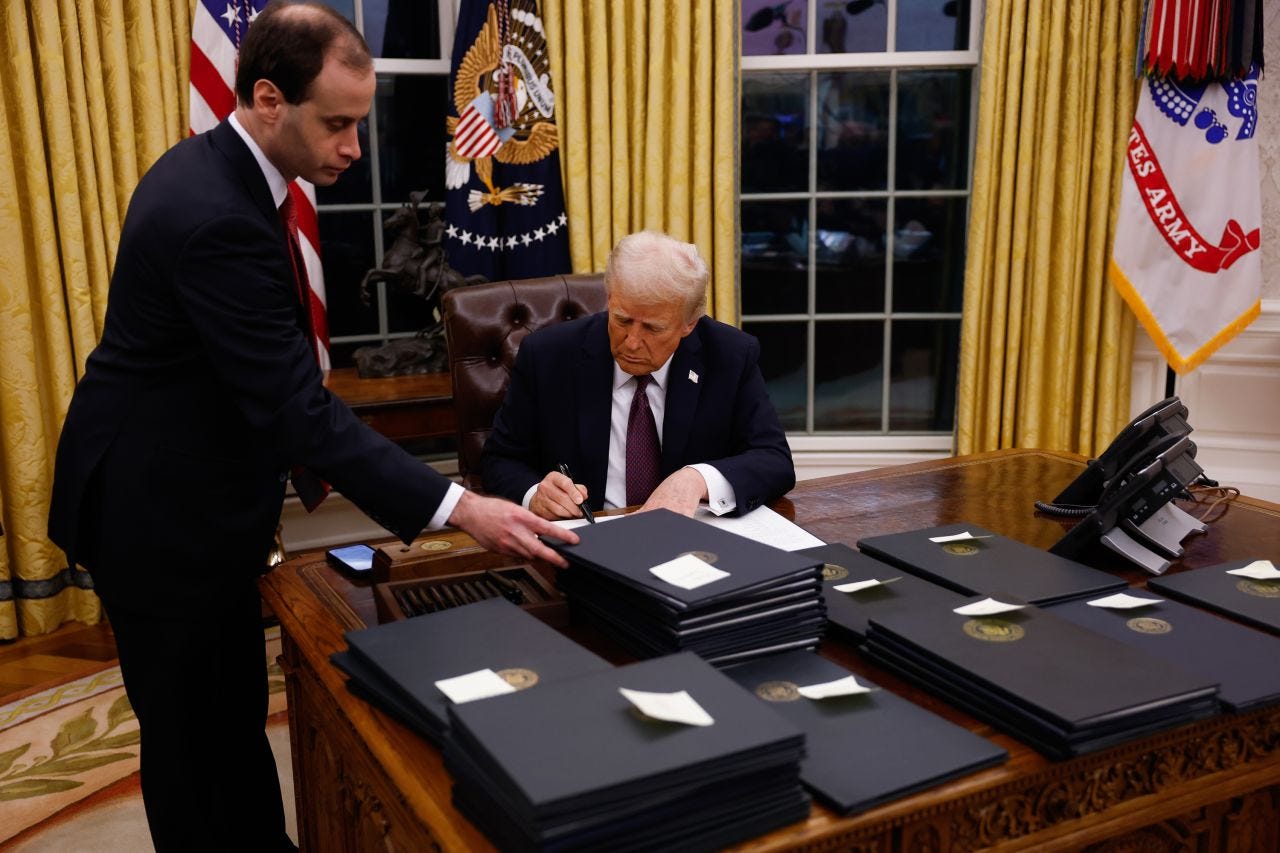
If I listed out everything detrimental that Trump did yesterday, this would be a 30 page piece, so I won’t do that to you (I’ll just post multiple articles for you throughout the week, because as always, I have a lot to say). If you have specific issues you’d like for me to address, send me a private message or drop them in the chat thread!
This is really well written. And terrifying. I have “white rabbits in my family and some friends who refuse to see the truth even though they don’t all support Trump. Is this available on Facebook?
I live in the UK, I was born here, at a time when Hitler threatened our lives. I grew up thinking fascism was dead.....